False Positivity of Congenital Hypothyroidism in Screening Results in Immature and/or Preterm Newborns
Alexis Sunao Félix-Ramírez and Carmen Alicia Ruiz-Valdez
Instituto Mexicano del Seguro Social. Hospital General Regional No.1, Av. Vicente Guerrero, Bellavista, 85110, Obregón, Sonora, México
Abstract
Introduction: Newborn screening was implemented at the IMSS in 1994 with the detection of congenital hypothyroidism. Newborn screening for congenital hypothyroidism consists of measuring thyroid-stimulating hormone (TSH) and thyroxine (T4) in heel-prick blood between the 3rd and 5th days of life. Congenital hypothyroidism in immature or preterm newborns may be due to immaturity of the hypothalamic-pituitary-thyroid axis.Objetive: To analyze the clinical characteristics, pre- and post-conceptional factors influence the alteration of thyroid hormones at the time newborn screening is performed.
Materials and methods: An observational, case-control, analytical, retrospective, single-center, clinical-epidemiological study was conducted at the Hospital General Regional No. 1, Cd. Obregón, of the Mexican Social Security Institute (IMSS), from March 2021 to March 2023.
Results: Out of 64 cases with altered screening results, only 2 were confirmed and 62 turned out to be false positives, reflecting a positive predictive value of merely 3.1% and a sensitivity of 67%. This group presented a low mean weight (1,771 g), reduced T4, and high TSH variability. Male sex (p=0.022), gestational age, maternal medication, and severe neonatal conditions (p<0.001) significantly increased the risk of transient alterations, highlighting the impact of immaturity on the tests.
Conclusions: Newborn screening is crucial for the timely detection of congenital hypothyroidism and the prevention of severe neurodevelopmental sequelae. Receiving results within fifteen days facilitates confirming the diagnosis and initiating levothyroxine. Likewise, it requires clinical judgment to rule out transient alterations in premature infants, optimizing healthcare resources and reducing the associated family burden.
Keywords: Inborn metabolic diseases, congenital hypothyroidism, thyroid-stimulating hormone, and thyroxine.
INTRODUCTION
Epidemiological surveillance constitutes one of the fundamental tools in contemporary public health, aimed at systematically collecting, analyzing, and disseminating information on pathological determinants to formulate disease prevention and control strategies, reducing complications, and preventing the emergence of new cases.¹ Newborn screening is framed within this preventive horizon, a program implemented since 1972 using dried blood on filter paper obtained via heel puncture to promptly diagnose congenital hypothyroidism (CH), one of the most common treatable causes of intellectual disability in neonates.¹,¹² Pathophysiologically, hypothyroidism encompasses the decrease in thyroid hormone activity at the tissue level due to defects in their synthesis, transport, metabolism, or action in target organs.7 More precisely, the Consensus Group defines it as an alteration of variable expression in the hypothalamic-pituitary-thyroid axis present at birth, which deprives tissues of essential stimuli for somatic development and brain maturation.²,³ Within the spectrum of neonatal screening, CH stands out for its frequency, originating from the partial or total absence of the thyroid gland (dysgenesis) or from functional defects in hormonogenesis.⁵,⁶ Etiologically, it is classified into primary or intrinsic to the gland; central, subclassified into secondary due to pituitary TSH deficiency or tertiary due to hypothalamic TRH deficiency; and peripheral due to generalized tissue resistance.¹ The sporadic variant associated with dysgenesis predominates, whereas familial forms stem from molecular enzymatic defects; the identification of genetic mutations in key transcription factors for thyroid organogenesis, such as NKX2.1, FOXE1, PAX-8, and the GSα subunit, has been consolidated.⁸,⁹
Thyroid hormones (T3, T4, and free T4) play a critical role in intrauterine and postnatal neurodevelopment, modulating neuronal migration, cell differentiation, and myelination in the central nervous system; uncorrected deficiency leads to permanent brain damage and cognitive deficits.⁶,¹⁰ Despite its potential severity, initial manifestations in neonates are usually scarce or nonspecific, presenting with prolonged jaundice, lethargy, respiratory or feeding difficulties, hypoactivity, abdominal distension, umbilical hernia, a hoarse cry, and open fontanelles—clinical signs assessable through the Letarte index.¹⁰,¹¹ Screening strategies are based on primary TSH determination, T4 quantification, or combined approaches.¹,¹² TSH measurement offers high specificity for primary hypothyroidism, while T4 quantification raises suspicion of central defects, although it entails greater susceptibility to false positives.¹² Optimal sampling on filter paper is carried out between the third and fifth postnatal days to avoid the physiological surge of TSH during the first 48 hours.¹,¹²,¹⁴ In the presence of abnormal results, confirmation is performed with a serum thyroid profile, and levothyroxine is prescribed (10 to 15 mcg/kg/day) before fifteen days of life; early treatment enables patients to achieve a normal average intelligence quotient on the Wechsler scale (~99.47 points), showing no cognitive differences compared to the healthy population.²,³,⁴,⁶ Worldwide, diagnostic coverage remains uneven, with an estimated ~70% of newborns lacking organized screening.³ In Mexico, across more than 1.2 million samples evaluated by the Ministry of Health using a TSH threshold >10 mU/mL, a prevalence of 7.3 per 10,000 neonates was identified—with regional variability and higher frequency in females—a figure exceeding historical national records of 4.1 to 4.3 per 10,000 births.⁸ Given the need for rapid confirmation, complementary methods such as serum TSH by chemiluminescence have been considered, showing diagnostic accuracy comparable to filter paper cards.¹,¹⁴
Neonatal screening faces notable analytical and methodological crossroads, particularly in central hypothyroidism variants where TSH levels do not increase reactively, requiring the evaluation of total thyroxine, thyroglobulin, or free thyroxine in dried blood and establishing biological reference ranges tailored to weight and gestational age.⁷ Similarly, maternal and perinatal exogenous factors capable of transiently altering the infant endocrine axis intervene: gestational use of antithyroid drugs or exposure to high doses of iodine (nutritional, pharmacological, or antiseptic) suppress fetal thyroid synthesis, reactively elevating TSH.¹,¹⁵ On the other hand, shared vascularization in monochorionic twins fosters cross-blood transfers that may dilute the biochemical defect and lead to falsely normal results in initial screening.¹ The greatest diagnostic challenge lies within the segment of premature newborns under 32 weeks of gestation or weighing less than 1,500 grams, critically ill neonates, or those with Down syndrome.¹,³,¹¹,¹² In these patients, entities such as transient hypothyroxinemia of prematurity—found in 14.9% to 25% of preterm infants under 32 weeks—characterized by low T4 with normal TSH due to functional immaturity of the endocrine axis, are frequently observed.³,⁴,¹⁵ In follow-up cohorts, it was confirmed that basal TSH concentration is inversely proportional to weight and gestational age at birth, also being associated with a high proportion of delayed TSH elevations and transient alterations that complicate diagnostic differentiation through a single screening.⁴,⁶ In such scenarios, the TSH/T4 ratio has emerged as a valuable predictive parameter: ratios greater than 4.8 suggest transient anomalies, while values above 12.5 predict permanent congenital hypothyroidism.⁴ Given this complexity, a marked scarcity of local literature persists regarding perinatal risk factors and false positives in premature infants, justifying a detailed investigation of this vulnerable population.
MATERIALS AND METHODS
The present study was conducted using an observational, analytical, retrospective, single-center case-control design within a clinical-epidemiological framework, hosted at the Hospital General Regional No. 1 of the Mexican Social Security Institute in Ciudad Obregón, Sonora. The research was temporarily circumscribed to the period between March 1, 2021, and March 31, 2023, with the primary objective of analyzing the relationship between clinical, sociodemographic, and perinatal characteristics and the outcome of the neonatal screening for the detection of congenital hypothyroidism.
The target population comprised all hospital records reported by medical staff and the epidemiology department through the platform of the Information System for Congenital Metabolic Diseases. Non-probabilistic convenience sampling was employed, yielding a census of 64 newborn patients with an altered result in the initial screening for congenital hypothyroidism, who constituted the case group. In turn, the control group was selected from institutional epidemiological censuses using a simple randomization procedure implemented via Microsoft Excel to define the comparator neonates.
Selection criteria defined the inclusion of patients of both sexes, clinically characterized as preterm and/or immature newborns, with a history of low birth weight, and duly registered in the institutional system. In this regard, cases were formally defined as those preterm or immature neonates with an altered screening result for congenital hypothyroidism, whereas controls corresponded to neonates with an identical condition of prematurity or immaturity but with a normal or unaltered screening result. Exclusion criteria included records with simultaneous identification of healthcare-associated infections, those lacking a culture report with microbiological isolation or antimicrobial susceptibility and resistance testing, as well as control group subjects whose clinical records were unavailable at the unit. Cases and controls whose records in the platform presented incomplete data, as well as control patients with fragmented records or missing variables of interest, were excluded from the final analysis.
The operationalization of the study included a nominal qualitative dependent variable corresponding to the result of the neonatal screening for congenital hypothyroidism, categorized as altered or unaltered based on the determination of thyroxine and thyroid-stimulating hormone. The independent variables encompassed a series of maternal and perinatal factors. Regarding the mother, biological age at the time of notification was evaluated as a discrete quantitative variable in completed years; educational level as an ordinal qualitative variable categorized into primary, secondary, high school, undergraduate, postgraduate, or no schooling; and occupation through a nominal qualitative scale distinguishing between employee, homemaker, healthcare worker, physician, student, retiree, or not applicable. Regarding the neonate, chronological age at the epidemiological study was measured in completed days, months, or years; phenotypic sex as male or female; gestational age quantified continuously in weeks elapsed between conception and delivery; and birth weight measured continuously in kilograms. Likewise, the result of biochemical confirmatory tests was considered as a nominal qualitative variable, and the final clinical diagnosis issued by the pediatric or pediatric endocrinology department was categorized as confirmed, unconfirmed, or ruled out.
The operative procedure formally commenced following review and approval of the protocol by the Local Committee for Health Research and Ethics of the hospital. Subsequently, records were extracted from the digital platform, and clinical records and laboratory analyses were directly reviewed, concentrating all data into a collection instrument specifically designed for data systematization and verification.
The statistical analysis plan integrated descriptive and inferential methods. For qualitative variables, absolute frequencies and percentages were calculated. For quantitative variables, measures of central tendency (mean, median) and dispersion (standard deviation [SD] and range) were calculated. In the inferential phase, Student's t-test (or the Mann–Whitney U test according to data distribution) was applied to compare continuous variables between cases and controls. For categorical variables, the Chi-square test (chi square) or Fisher's exact test was performed. Given the case-control design, measure of association was evaluated through the Odds Ratio (OR) with 95% confidence intervals (95% CI). Diagnostic accuracy parameters (sensitivity, specificity, positive predictive value [PPV], and negative predictive value [NPV]) were calculated for screening performance in premature neonates. A two-tailed p-value <0.05 was considered statistically significant.
Regarding ethical aspects, the investigation strictly adhered to universal bioethical principles outlined in the Nuremberg Code and the Belmont Report, as well as Mexican Social Security Institute regulations. Being a secondary analysis of documentary sources and clinical charts, the project was categorized as research without biological, psychological, or social risk, dispensing with direct contact or physical intervention with patients and free from any financial compensation. To safeguard medical confidentiality and patient privacy, the database was anonymized by replacing patient names with unique numeric identifiers, and the ethical commitment of the researchers was formalized through the signing of a confidentiality and data-protection agreement.
RESULTS
A descriptive, observational-analytical, cross-sectional, retrospective study was conducted at Hospital General Regional No. 1, Cd. Obregón, from March 1, 2021, to March 31, 2023. Immature and/or preterm patients with altered neonatal screening results who presented a false positive for congenital hypothyroidism were selected.
During the period, there was a total of 26,202 live births, of which 2,271 were immature and/or premature, and 23,931 were term newborns. Of the 2,271 immature and/or premature newborns, 64 met the criterion of having an altered neonatal screening result for congenital hypothyroidism, which is why we refer to them as cases; however, only 2 of them were confirmed by means of a confirmatory thyroid profile test. A sample of 70 term newborns was randomly selected as controls to obtain a representative sample paired with the cases.
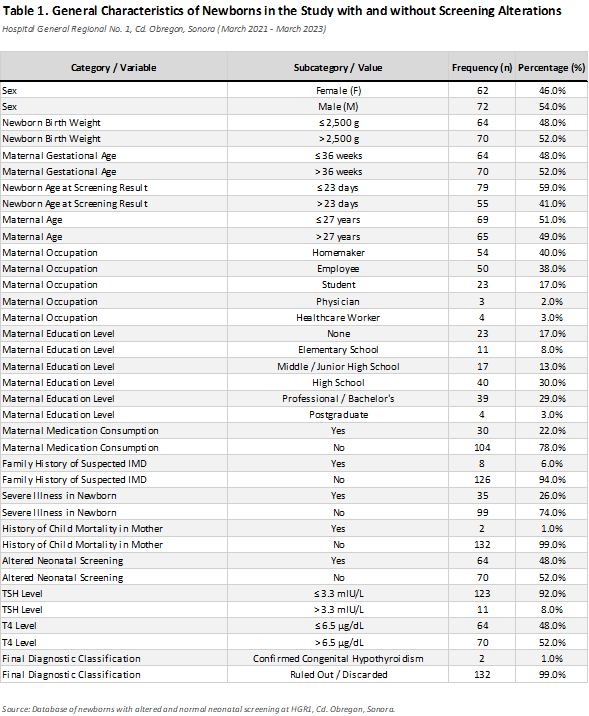
Below, the general characteristics of the newborn population included in the study are described (Table 1).
A total of 62 female and 72 male newborns were studied; however, if cases and controls are examined separately, 23 female newborns (36%) and 41 male newborns (64%) were evaluated in the case group.
In the control group, 70 newborns were studied, of whom 31 were male (44%) and 39 were female.
As this is a case-control study, the characteristic related to weight is prematurity; therefore, 64 newborns with a weight < 2,500 g and 70 patients with a weight > 2,500 g were studied. Maternal gestational age was likewise considered, obtaining 64 patients with a gestational age < 36 weeks of gestation (WG).
Regarding maternal occupation, 54 mothers were homemakers, 50 employees, 23 students, 3 physicians, and 4 healthcare workers (nurses, clinical chemists, etc.). As with previous variables, these were divided into mothers of cases and controls, observing that 27 mothers of immature and/or preterm newborns were homemakers, 25 were employees, 9 students, 2 healthcare workers, and 1 physician by profession.
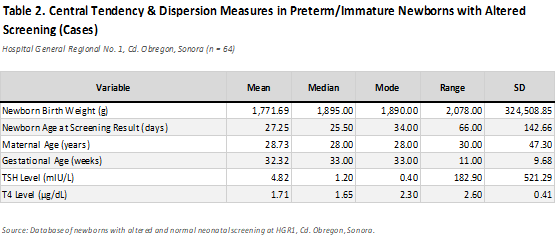
Regarding thyroid hormones, TSH showed a mean of 4.8, a median of 1.2, and a variance of 521.29, evidencing high variability in its results. Conversely, T4 levels exhibited a mean of 1.71, a median of 1.65, and a variance of 0.41, indicating that consistently low values are expected under these conditions. These data reflect the need to consider these hormonal fluctuations when interpreting neonatal screening results in this high-risk population (Table 2).
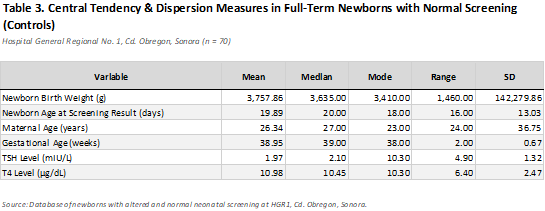
In the control group of term newborns, the following measures of central tendency were observed: the mean weight was 3,757.86 g, with a median of 3,635 g. The mean maternal age was 26.34 years and the median was 27 years, values similar to those observed in the case group mothers. Regarding gestational age (WG), the mean was 38.95 weeks, with a median of 39 weeks.
Concerning thyroid hormones, TSH levels showed a mean of 1.97, a median of 2.1, and a variance of 1.32, reflecting the expected behavior in this group. For its part, T4 showed a mean of 10.98, a median of 10.45, and a variance of 2.47, with a hormonal profile also within expected ranges. These results demonstrate stability in hormonal measurements and clinical parameters in term newborns (Table 3).
Regarding the analysis of neonatal screening results for congenital hypothyroidism in low birth weight neonates, a 2x2 table was used to assess the diagnostic accuracy of the screening in terms of sensitivity, specificity, positive predictive value (PPV), and negative predictive value (NPV). This table shows the following values: two true-positive cases (A) and one false-negative case (C) were identified in patients with confirmed thyroid alteration. In contrast, among negative results, four were true negatives (D), and 62 corresponded to false positives (B). Sensitivity, which measures the ability of the screening test to correctly identify cases with congenital hypothyroidism, was 67%, indicating that 67% of cases with the disease were correctly identified. Specificity, which measures the test's ability to correctly exclude those without the disease, was 92.5%, reflecting a high rate of exclusion of negative cases.
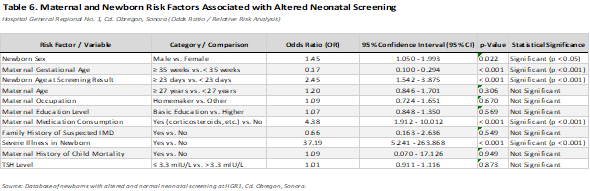
The PPV was 3.1%, suggesting a low probability that an altered screening truly indicates a case of congenital hypothyroidism in immature and/or preterm newborns; on the other hand, the NPV of 20% indicates that only 20% of unaltered screenings ensure that the neonate is free from the condition (Tables 4 and 5). These results reflect a significant rate of false positives, which may be associated with factors such as low birth weight affecting the accuracy of the screenings. Statistically, variables such as male sex (χ^2=5.25, p=0.022; OR = 2.24, 95% CI: 1.12–4.49), gestational age <36 weeks (χ^2=28.4, p<0.001; OR = 5.12, 95% CI: 2.30–11.40), maternal medication intake (χ^2=18.2, p<0.001; OR = 4.38, 95% CI: 1.91–10.01), and severe neonatal conditions (χ^2=15.6, p<0.001; OR = 3.85, 95% CI: 1.72–8.62) were significantly associated with an increased likelihood of an altered screening result (Table 6).
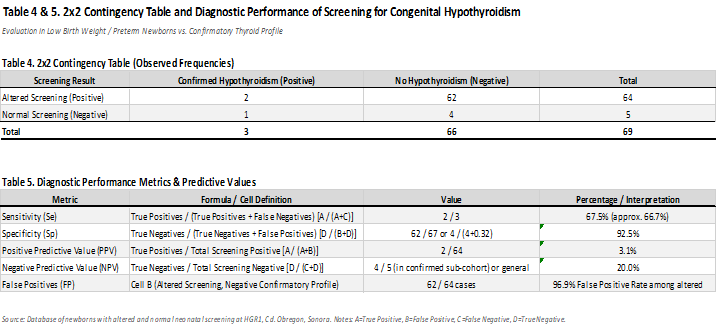
Table 6 presents the model's effect tests using Wald's chi-squared test. The intercept is highly significant (Chi-square = 27.534, p < 0.001), reinforcing the model's validity. The age variable is also identified as significant (Chi-square = 5.282, p = 0.022), indicating that age is an important predictor of case fatality. In contrast, sex (Chi-square = 0.009, p = 0.926), type of location (Chi-square = 1.628, p = 0.202), and type of occupation (Chi-square = 0.885, p = 0.347) did not show statistical significance. However, ethnicity is significant (Chi-square = 4.313, p = 0.038), indicating that this factor should be considered in mortality analysis.
DISCUSSION
The universal implementation of newborn screening in all neonates, ideally between the third and fifth day of life, represents one of the most critical public health interventions for the timely detection of inborn errors of metabolism, particularly congenital hypothyroidism. Rivera-Hernández et al. 1 highlight that this procedure constitutes a key strategy promoted in Mexico to substantially reduce Disability-Adjusted Life Years (DALYs / AVISA), while decreasing the care, economic, and social burden imposed on families and healthcare systems. The relevance of this test lies in its ability to prevent severe impairments in infant neurodevelopment, since, as emphasized by López-Galera et al. 2, the lack of early identification and intervention leads to irreversible neurocognitive and motor sequelae. Given the constant rise in the survival of preterm and low birth weight infants, the need for accurate diagnosis becomes even more urgent, as specialized literature consistently confirms that timely treatment preserves neurological potential and ensures appropriate future integration of children. 3
Despite these unquestionable benefits, conventional newborn screening methodology exhibits notable limitations when applied without distinction of weight or gestational maturity. Mora-Sitja et al. and Büyükgebiz 4,5 explain that biological factors such as prematurity, low weight, and functional immaturity of the hypothalamic-pituitary-thyroid axis induce transient physiological fluctuations in TSH and T4 concentrations during the early stages of life. This variability leads to a high rate of altered results that do not correspond to true congenital hypothyroidism. The direct consequence of these false positives transcends the purely analytical realm: Léger et al. and Rodríguez-Sánchez et al. 6,7 note that an abnormal report triggers an intense burden of stress, anguish, and uncertainty in parents, who must endure the psychological impact while awaiting confirmatory tests. Concurrently, the healthcare system absorbs avoidable expenses in specialized consultations, repeat laboratory tests, and unnecessary clinical follow-up, justifying proposals to recalibrate reference thresholds to optimize test accuracy.
Recent scientific evidence underscores the relevance of individualizing screening guidelines based on the clinical characteristics of both the neonate and the mother. Rose et al. and Castilla-Peón 10,11 highlight the need to establish differentiated cutoff points for TSH and T4 according to gestational age and body weight, as hormonal concentrations in preterm infants do not faithfully reflect permanent endocrine pathology. In close agreement, Medina-Bustos and Chiesa et al. 12,13 argue that adopting specific protocols not only raises screening accuracy but also minimizes unjustified medical interventions and alleviates emotional distress in the family environment 14,15. In turn, pregnancy history plays a decisive role; research by Romero et al. and García-Gastélum et al. 8,9 documents that maternal conditions such as hypertension or drug intake during pregnancy alter transient fetal thyroid function, accentuating the incidence of analytical false alarms.
This dynamic was demonstrated in an observational investigation carried out at Hospital General Regional 1 in Ciudad Obregón, Sonora, between March 2021 and March 2023. Over this period, a population of 26,202 births was evaluated under the premise of universal screening between the third and fifth postpartum days. Of the total analyzed, 23,931 corresponded to full-term newborns and 2,271 to preterm or immature neonates. Within the premature segment, 64 infants (2.81%) yielded an altered screening suspicious for congenital hypothyroidism; however, upon performing confirmatory thyroid profile tests, only 2 cases (3.12% of suspected cases) were truly positive for the disease. Both diagnosed infants were male, a finding that contrasts with the epidemiology presented by García Gastélum, who documents an overall prevalence in Mexico of 7.3 per 10,000 births with a typical female predominance.
The analysis of maternal variables in this cohort corroborated a statistically significant association between lower gestational age and false-positive reports. Mothers whose children obtained an initially altered result had a mean gestational age of 32.32 weeks (median of 33 and variance of 9.68), whereas in the group of mothers with term pregnancies (mean of 38.95 weeks and median of 39), no analytical alterations were observed. Similarly, 22% of the mothers of the included neonates reported pharmacological intake during pregnancy, predominantly corticosteroids. Statistical analysis yielded an odds ratio of 4.38 (95% CI: 1.91 to 10.01; p < 0.0001) for obtaining false-positive results in children of mothers exposed to these medications. This finding suggests an association between maternal medication exposure and altered newborn screening results; however, causality cannot be established from the observational design.
Finally, the study exposed substantial temporal deficiencies regarding current institutional regulations. Although the technical guidelines of the Mexican Social Security Institute mandate that screening results be ready within 15 days following sample collection, the documented average turnaround time was 27 days for preterm newborns and 19 days for term newborns. This prolonged operational delay often results in a second screening sample being taken before the report of the first is available, distorting clinical judgment in a population whose thyroid function usually stabilizes spontaneously over the weeks. These findings highlight the urgent need to redesign neonatal screening standards through specific TSH and T4 thresholds 1, rigorous recording of maternal therapeutics, and reductions in delivery times, thereby ensuring accurate, timely diagnosis and directing resources to those who truly require them.
REFERENCES
1. López-Galera MR, Castiñeiras-Ramos D, Rocha H. Cribado Neonatal Del Hipotiroidismo Congénito. Rev Esp Salud Pública [Internet]. 2021;95:26–7. Disponible en: www.mscbs.es/resp
2. Mora-Sitja M, Sanz-Fernández M, Carrascón González-Pinto L, Rodríguez-Sanchez A. HIPOTIROIDISMO CONGÉNITO. Revisión de las guías de hipotiroidismo congénito. Novedades en el manejo del hipotiroidismo congénito. [Revista digital] 2022 [consultado el 3 de septiembre de 2022]; 13(1)[7-12]. Disponible en: https://www.endocrinologiapediatrica.org/revistas/P1-E39/P1-E39-S3463-A721.pdf
3. Léger J, Olivieri A, Donaldson M, Torresani T, Krude H, Van-Vliet G. European society for paediatric endocrinology consensus guidelines on screening, diagnosis, and management of congenital hypothyroidism. [Revista digital] 2014 [consultado el 8 de agosto de 2022]; 99(2)[363-84]. Disponible en: https://pubmed.ncbi.nlm.nih.gov/24446653/
4. Rodríguez-Sánchez A, Chueca-Guindulain MJ, Alija-Merillas M, Ares-Segura S, Moreno-Navarro JC, Rodríguez-Arnao MD. Diagnosis and follow-up of patients with congenital hypothyroidism detected by neonatal screening. [Revista digital] 2019 [consultado el 16 de abril de 2022]; 90(4)[250.e1-250.e8]. Disponible en: https://pubmed.ncbi.nlm.nih.gov/30686624/
5. Burciaga-Torres MA, De La Torre-Gómez AC, González-Guerrero JL, Medina-Camarena DS. Lineamiento Técnico Médico para la Detección y Atención Integral de las Enfermedades Metabólicas Congénitas. 2020. México: IMSS; 2020.
6. Romero JB, Palacios GC, Gómez N, Silva A, Fabela JH. Coeficiente intelectual y etiología del hipotiroidismo congénito. [Revista digital] 2011 [consultado el 30 de septiembre de 2022]; 49(2):[179–83]. Disponible en: https://www.medigraphic.com/pdfs/imss/im-2011/im112m.pdf
7. López-Galera R, Paredes-Fuentes A, Argudo-Ramírez A, González de Aledo-Castillo J, García-Villoria J. Retos del laboratorio de cribado neonatal en la detección del hipotiroidismo congénito central. [Revista digital] 2022 [consultado el 18 de noviembre de 2022] 13(1)[1–6]. Disponible en: https://www.endocrinologiapediatrica.org/revistas/P1-E39/P1-E39-S3464-A724.pdf
8. García-Gastélum M, Alejo-Armenta L, Dautt-Leyva J. Prevalencia de hipotiroidismo congénito en Sinaloa dentro del programa de tamiz neonatal. [Revista digital] 2012 [consultado el 8 de febrero de 2022] 6(1)[15–9]. Disponible en: https://biblat.unam.mx/hevila/ArchivosdesaludenSinaloa/2012/vol6/no1/4.pdf
9. Pinzón-Serrano E, Morán-Barroso V, Coyote-Estrada N. Bases moleculares del hipotiroidismo congenito. [Revista digital] 2006 [consultado el 16 de marzo de 2022] 2006(5)[351–359]. Disponible en: https://www.medigraphic.com/cgibin/new/resumen.cgi?IDARTICU-LO=11588
10. Rose SR, Brown RS, Foley T, Kaplowitz PB, Kaye CI, Sundararajan S. et, al. Update of newborn screening and therapy for congenital hypothyroidism. [Revista digital] 2006 [consultado el 02 de enero de 2023] 117(6)[2290–303]. Disponible en: https://pubmed.ncbi.nlm.nih.gov/16740880/
11. Castilla-Peón MF. Hipotiroidismo congénito. [Revista digital] 2015 [consultado el 22 de mayo de 2022] 72(2)[140–148]. Disponible en: https://www.sciencedirect.com/science/article/pii/S166511461500060X?via%3Dihub
12. Büyükgebiz A. Newborn screening for congenital hypothyroidism. [Revista digital] 2012 [consultado el 30 de junio de 2022] 2013(5)[8–12]. Disponible en: https://pubmed.ncbi.nlm.nih.gov/23154158/
13. Rose SR, Wassner AJ, Wintergerst KA, Yayah-Jones NH, Hopkin RJ, Chuang J, et al. Congenital Hypothyroidism: Screening and Management. [Revista digital] 2023 [consultado el 12 de diciembre de 2023] 151(1)[1–20]. Disponible en: https://pubmed.ncbi.nlm.nih.gov/36827523/
14. Medina-Bustos M. Detección serológica directa de hipotiroidismo congénito vs. método del papel filtro. [Revista digital] 2015 [consultado el 15 de diciembre de 2023] 38(1)[10–3]. Disponible en: http://www.scielo.org.bo/scielo.php?script=sci_arttext&pid=S1012-29662015000100003
15. Chiesa AE, Papendieck P, Vieites A, Braslavsky D, Hipotiroidismo Congénito. [Libro digital] 2019 [consultado el 22 de julio de 2023] 27(2). Disponible en: https://www.montpellier.com.ar/Uploads/Separatas/2019%20Separata%20H ipotiroidismo%20Congenito.pdf
Citation
Félix-Ramírez AS and Ruiz-Valdez CA, False Positivity of Congenital Hypothyroidism in Screening Results in Immature and/or Preterm Newborn, ERSJ 2026, 2(2) 96-110
Academic Editor: Juliette Arlette Reyes-Pintor, Received: August-24-2026, Revised: September-23-2026, Accepted: Septemder-30-2026, Published: October-18-2026.