Vol. 2, Num. 1, 2026
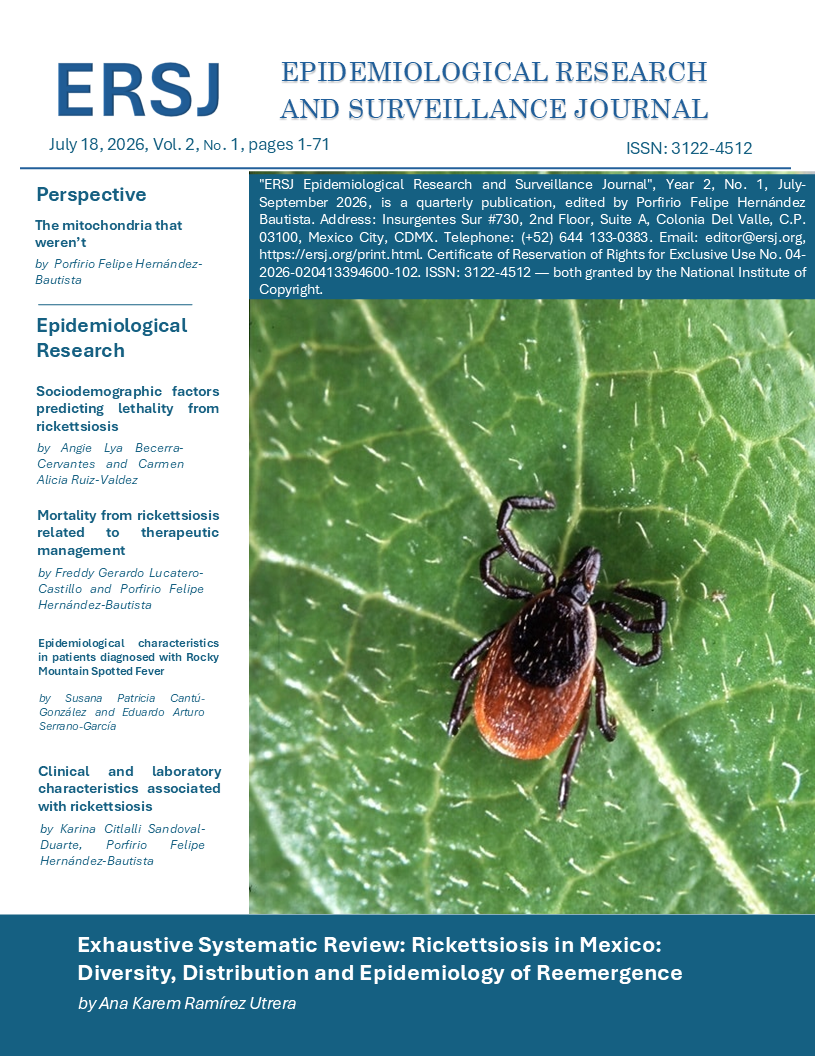
EPIDEMIOLOGICAL RESEARCH AND SURVEILLANCE JOURNAL
Publish
Publications on epidemiological research play an essential role in disseminating scientific knowledge about public health, disease prevention, and the analysis of health patterns in communities. Therefore, methodological rigor, scientific clarity, social relevance, and professional ethics are essential. The fundamental criteria for publishing an article are detailed below, accompanied by practical recommendations for those who aspire to disseminate their findings.
Originality and Relevance of the Topic
The first requirement for publishing an article is that the research be original. The work must contribute new knowledge, whether in the approach to the problem, methodology, results, or interpretation. Furthermore, it must be relevant to the scientific community and society, addressing public health problems of local, regional, or global significance.
• Originality: Articles should avoid duplicating previous research. If it is a review or meta-analysis, it must justify the need to reexamine the topic.
• Relevance: The manuscript should answer important questions in epidemiology, contribute to the understanding of risk factors, disease patterns, health interventions, or provide useful data for public policy.
Methodological Rigor and Study Design
The study design should be appropriate for answering the research question, and the methodology used should be clear and replicable. Journals value well-structured observational studies (cohorts, case-control, cross-sectional), controlled clinical trials, systematic reviews, robust statistical analyses, and representative sampling methods.
• Clear Definition of Objective: The article should clearly state the research question and hypothesis.
• Description of Population and Sample: Specify the study universe, inclusion and exclusion criteria, sample size, and its statistical justification.
• Instruments and Procedures: Detail the data collection instruments, questionnaire validation, diagnostic methods, and follow-up procedures.
• Statistical Analysis: Describe the statistical methods and software used, as well as the significance tests and bias controls.
• Reproducibility: The methodology must allow other people to replicate the study in similar contexts.
Clear and Complete Results
The results section should present the findings in a clear, organized, and understandable manner. It is essential to include tables, figures, and graphs that facilitate analysis and interpretation. The results should be described objectively, without overinterpretation or omission of relevant data.
• Data Presentation: Use tables and figures to show patterns, comparisons, and trends.
• Transparency: Report all results, including those that do not support the initial hypothesis.
• Sufficient Disaggregation: Describe primary and secondary results, subgroup analyses, and sensitivity.
Discussion and Informed Interpretation
The discussion should interpret the results in the context of the existing literature, analyze their implications for epidemiology and public health, and acknowledge the study's limitations.
• Comparison with Previous Studies: Relate the findings to similar research.
• Implications: Explain how the results may influence prevention strategies, health policies, or future research.
• Limitations: Identify methodological weaknesses, potential biases, and limitations in the generalizability of the results.
Relevant Conclusions and Recommendations
Conclusions should be brief, concrete, and derived directly from the results. It is important to avoid statements that are not supported by the data obtained. If appropriate, offer recommendations for practice, future research, or public health decision-making.
Research and Publication Ethics
Publications of epidemiological research require that studies have been approved by ethics committees and that informed consent has been obtained from participants, where applicable. Furthermore, research must respect confidentiality and protect sensitive data.
• Ethics Statement: Include a section in the manuscript specifying compliance with ethical regulations.
• Informed Consent: Describe how the consent of the subjects was obtained and documented.
• Data Protection: Explain the measures taken to preserve privacy and confidentiality.
• Conflicts of Interest: Declare any personal, institutional, or financial relationships that could influence the interpretation of the results.
Clear Writing and Appropriate Format
The article should be written in clear, precise, and unambiguous language. It is recommended to avoid unnecessary technical jargon and adhere to the style and editorial standards of the target journal (e.g., Vancouver, APA, IMRAD).
• Structure: Introduction, Methodology, Results, Discussion, Conclusions, References, and, if applicable, appendices.
• References: Cite recent, relevant, and high-quality sources, following the required format.
• Length and Format: Respect the word or page limits, font, line spacing, and format of tables and figures established by the journal.
• Abstract and Keywords: Include a structured abstract and three to five keywords representative of the content.
Review Process and Response to Comments
Once the article is submitted, it typically undergoes peer review, which assesses the quality, relevance, and originality of the work. It is essential to respond professionally to the reviewers' comments and suggestions.
• Peer review: The article may be accepted, rejected, or require modifications.
• Response to comments: Authors are expected to respond to each comment, explain the changes made, and justify their decisions.
Additional Considerations
• Open Access: Because this journal is open access, there is a minimal fee for the publication to maintain its open access, which can increase the article's visibility.
• Language: Consider professional translation of the manuscript.
• Previous Publication: Avoid submitting the manuscript to more than one journal simultaneously or publishing results that have already been disseminated elsewhere.
• Supplementary Data: Attach supplementary material such as databases, questionnaires, or codes.
Article submission
The journal welcomes original contributions with the following guidelines: Click here
Authors who wish to publish in the journal can submit their manuscript to the email address editor@ersj.org.