Maternal risk factors associated with confirmation of congenital syphilis in newborns at a Sonora hospital, 2021–2024
Julio César Vargas-Corona and Carmen Alicia Ruiz-Valdez
Instituto Mexicano del Seguro Social. Hospital General Regional No.1, Av. Vicente Guerrero, Bellavista, 85110, Obregón, Sonora, México
Abstract
Introduction: Congenital syphilis is a severe and preventable condition resulting from the vertical transmission of Treponema pallidum.Objetive: To determine the maternal factors associated with the diagnostic confirmation of congenital syphilis among notifications of suspected or evaluated newborns at Regional General Hospital No. 1 in Ciudad Obregón, Sonora, during the 2021–2024 period.
Materials and methods: An observational, analytical, retrospective, and cross-sectional hospital-based study was conducted on 80 notifications that met eligibility criteria. Operational definitions of confirmed and discarded cases adhered to Mexican national epidemiological guidelines (clinical criteria, treponemal/non-treponemal serology, or resolution by the Morbidity and Mortality Committee). Associations were evaluated through recalculation of odds ratios (OR, 95% CI) and exact tests (Fisher's exact test / Freeman-Halton test for R x C contingency tables).
Results: Of 80 notified records, 35 (43.8%) were confirmed and 45 (56.3%) were discarded. A total of 24 neonates (30.0%) were symptomatic and 56 (70.0%) asymptomatic. Notably, 76 neonates (95.0%) received an antibiotic regimen, reflecting an empirical, preventive, or presumptive clinical management initiated prior to official diagnostic committee classification. Documented gestational screening was recorded in 30 mothers of confirmed cases and 44 of discarded cases (crude OR = 0.14, 95% CI: 0.015–1.24; Fisher's exact test p = 0.089). Educational level distribution across categories showed small and zero-cell counts, requiring exact R x C evaluation (p = 0.045). For intravenous drug use (0/35 in confirmed vs. 2/45 in discarded), Haldane-Anscombe zero-cell correction yielded an OR of 0.25 (95% CI: 0.01–5.32; p = 0.502).
Conclusions: In this hospital sample of notified records, observed associations between maternal factors and diagnostic confirmation are exploratory. Findings cannot be generalized to live births in the state nor used to calculate population incidence or attributable fractions.
Keywords: Congenital syphilis, maternal risk factors, diagnostic confirmation, prenatal screening, hospital surveillance.
INTRODUCTION
Syphilis, caused by the spirochete Treponema pallidum subspecies pallidum, remains a critical public health issue worldwide. Vertical transmission of the microorganism via the transplacental route can occur during any stage of gestation or at delivery, leading to congenital syphilis (CS). This condition is associated with severe perinatal complications, including spontaneous abortion, stillbirth, fetal hydrops, prematurity, low birth weight, and permanent multisystemic sequelae in the newborn [1, 2].
At the international level, the World Health Organization (WHO) and the Pan American Health Organization (PAHO) have promoted the initiative for the Elimination of Mother-to-Child Transmission (EMTCT-PLUS) of syphilis and HIV
1, 2
. Despite these strategies, a re-emergence or persistence of high rates of congenital syphilis has been documented across various Latin American countries, linked to structural barriers in accessing prenatal care, diagnostic supply shortages, and failures in timely maternal treatment with benzathine penicillin [3, 4].In Mexico, the clinical and epidemiological framework is governed by the Official Mexican Standard NOM-039-SSA2-2014, For the prevention and control of sexually transmitted infections
5
, and the Official Mexican Standard NOM-007-SSA2-2016, For the care of women during pregnancy, childbirth, and the puerperium, and of the newborn6. Furthermore, the General Directorate of Epidemiology (DGE) establishes standardized flowcharts for mandatory notification and case investigation
7
.Despite existing normative guidelines, clinical hospital practice reveals substantial variability in the final confirmation process among cases notified as suspected. The analysis of maternal factors documented in clinical records is therefore relevant not as causal population determinants, but as factors associated with the triage, clinical suspicion, and diagnostic classification dynamics within institutional epidemiological surveillance. The present study aimed to determine the maternal factors associated with the diagnostic confirmation of congenital syphilis among newborn records notified at Regional General Hospital No. 1 in Ciudad Obregón, Sonora, during the 2021–2024 period.
MATERIALS AND METHODS
A hospital-based, observational, analytical, retrospective, and cross-sectional study was conducted at Regional General Hospital No. 1 of the Mexican Social Security Institute (IMSS) in Ciudad Obregón, Sonora, covering the period from January 2021 to December 2024. The target population consisted exclusively of clinical records of mother-infant dyads notified to the epidemiological surveillance system due to suspicion of congenital syphilis. Because this was a non-probabilistic convenience hospital sample of notifications, the data do not represent the general population of live births in the state of Sonora; consequently, the design does not permit the calculation of population incidence rates, population relative risks, or attributable fractions.
Sample Flow
During the study period, an initial total of N = 92 notified or suspected records were identified. The following selection criteria were applied:
1. Identified records: N = 92.
2. Exclusion criteria (n = 7): Notifications referred from other healthcare units lacking complete local clinical records, or records without initial confirmatory serological tests.
3. Elimination criteria (n = 5): Records with loss of neonatal serological follow-up or critical missing data in the epidemiological case report form.
4. Final analytical sample: N = 80 mother-infant dyads (35 confirmed cases and 45 discarded cases).
Sample flow diagram:
● Initial identified sample: N = 92
● Excluded (n = 7): Lacking initial confirmatory testing / external transfer
● Eliminated (n = 5): Incomplete clinical records / loss of serological follow-up
● Final analytical sample: N = 80
○ Confirmed cases (n = 35; 43.8%)
○ Discarded cases (n = 45; 56.3%)
Operational Definitions and Exposures
Three distinct stages of maternal exposure evaluation were operationalized:
● Performance of gestational screening: Documentation of at least one non-treponemal test (VDRL/RPR) performed during any trimester of pregnancy (performed vs. not performed).
● Screening test reactivity: Presence of reactive serology or documented non-treponemal titer.
● Maternal treatment: Documented administration of benzathine penicillin G according to maternal clinical stage, classified as adequate or untreated/incomplete.
Outcome Variable (Epidemiological Classification): Strictly adhered to the Standardized Procedures Manual for the Epidemiological Surveillance of Congenital Syphilis (DGE/SSA) [7]:
● Confirmed case: A newborn born to a mother with serological evidence of syphilis who presented at least one of the following criteria: physical examination findings compatible with congenital syphilis, radiological or cerebrospinal fluid (CSF) alterations, non-treponemal test (VDRL) titers fourfold higher (two dilutions) than maternal titers, a positive treponemal test (FTA-ABS / Western blot), or formal ratification by the institutional Morbidity and Mortality Committee following clinical record audit.
● Discarded case: An evaluated/notified newborn who did not fulfill the criteria for a confirmed case and demonstrated negative serological follow-up throughout the evaluation period.
Statistical Analysis
Data was analyzed using contingency tables reconstructed directly from surveillance databases. Odds ratios (OR) with 95% confidence intervals (95% CI) were calculated. In contingency tables with zero cells (e.g., intravenous drug use among confirmed cases, primary school maternal education), the Haldane-Anscombe correction (+0.5 added to each cell) was applied. For complex nominal and ordinal categorical variables (the 4 x 2 table of maternal education), the Freeman-Halton exact test for R x C tables was used, avoiding invalid asymptotic chi-square assumptions given low expected frequencies. For 2 x 2 tables, two-tailed Fisher's exact test was used.
Rigid hypotheses-testing phrasing regarding 'accepting or rejecting H0' was omitted, prioritizing the presentation of point estimates (OR), 95% confidence intervals, and exact p-values to reflect statistical precision and uncertainty. Due to sample size constraints (35 confirmed events), broad multivariable models were avoided to prevent overfitting; penalized maximum likelihood estimation (Firth's logistic regression) is highlighted for future investigations with sparse cell counts.
RESULTS
A total of 80 records of newborns notified due to suspected congenital syphilis were evaluated. The overall distribution by final epidemiological classification is shown in Table 1.
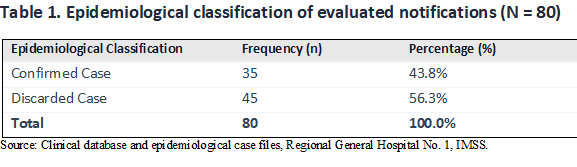
Table 2 details the clinical presentation of newborns at birth and the therapeutic regimens administered in the hospital unit.
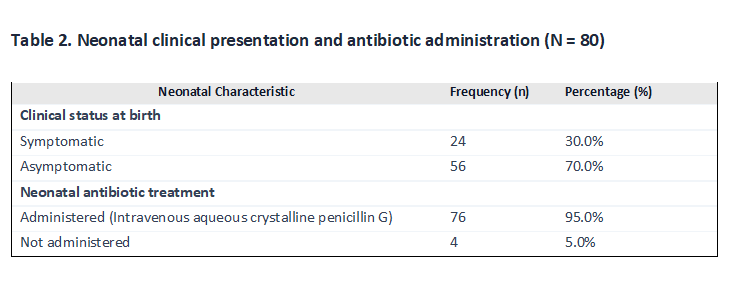
The high proportion of neonates who received antibiotic therapy (95.0%), including the majority of cases ultimately discarded by the committee, reflects strict adherence to hospital protocols for immediate empirical prophylaxis and treatment. In newborns delivered to mothers with reactive screening or undocumented/inadequate prenatal treatment, intravenous crystalline penicillin G is initiated routinely at birth without delaying therapy for definitive serological confirmation or audit committee resolution.
Consolidated bivariate analyses comparing sociodemographic, clinical, and maternal history variables with the diagnostic confirmation of congenital syphilis are presented in Table 3.
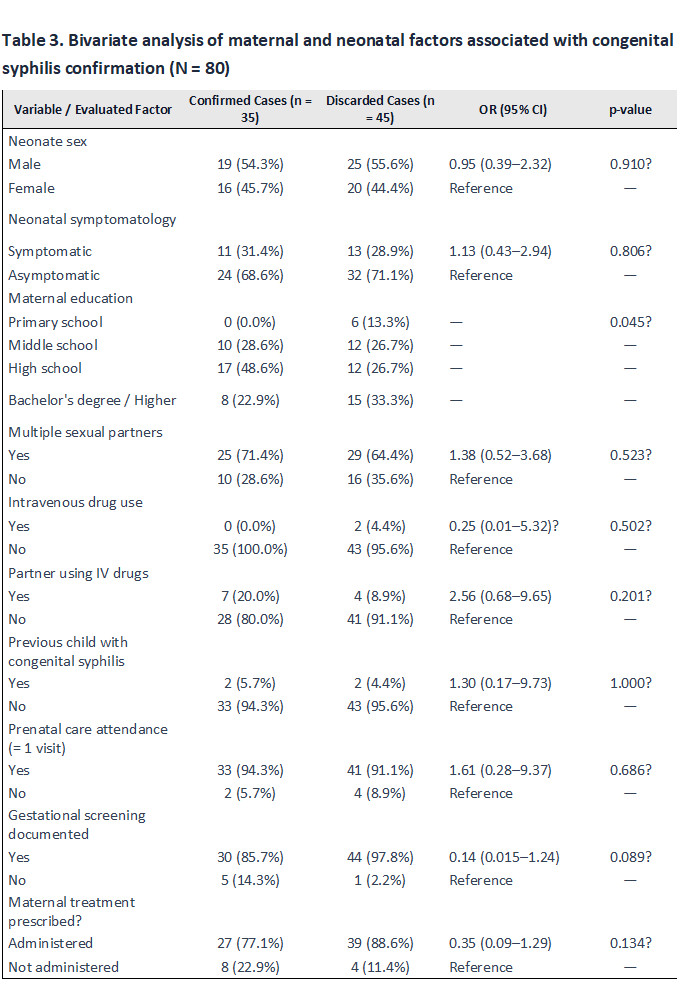
Regarding documented gestational screening, the crude OR of 0.14 (95% CI: 0.015–1.24; p = 0.089) reflects the nature of a pre-selected sample evaluated under epidemiological suspicion. In this hospital surveillance setting, the absence of documented prenatal screening triggered a more comprehensive neonatal diagnostic evaluation at delivery, increasing the likelihood of case confirmation by the committee.
DISCUSSION
The analysis of maternal factors and their association with the diagnostic confirmation of congenital syphilis at Regional General Hospital No. 1 provides insight into the dynamics of hospital-based epidemiological surveillance in southern Sonora.
A nuanced interpretation of prenatal screening and maternal treatment is essential. While global biomedical literature demonstrates conclusively that timely screening and penicillin treatment prevent vertical transmission of Treponema pallidum [8, 9], the present findings do not assess the biological efficacy of penicillin or screening effectiveness in the general population. In a hospital cohort conditioned on epidemiological suspicion, observed odds ratios reflect triage patterns and detection biases: infants born to mothers without documented prenatal screening enter hospital care under greater clinical scrutiny, triggering exhaustive laboratory investigations and a higher probability of diagnostic confirmation.
Regarding economic assessments, it should be clarified that this study did not include cost-effectiveness evaluations, direct cost accounting, or financial burden calculations. International literature regarding the economic burden and cost-effectiveness of maternal syphilis prevention [10] serves exclusively as contextual background on public health relevance, rather than an empirical finding derived from this dataset.
The estimates obtained displayed wide confidence intervals (for instance, in partners using intravenous drugs or prior obstetric history of congenital syphilis), which is attributable to the modest sample size (N = 80; 35 confirmed events). Consequently, results must be interpreted with caution and from an exploratory perspective, avoiding definitive causal statements or estimates of absolute population risk.
Study Limitations
1. Design and sampling: The cross-sectional, retrospective design based on a hospital convenience sample prevents estimation of the true population incidence of congenital syphilis in Ciudad Obregón or Sonora.
2. Sample size and power: The presence of sparse and zero-event cells limited estimation precision, requiring statistical adjustments (Haldane-Anscombe, Freeman-Halton) and precluding non-penalized multivariable logistic regression modeling.
3. Data sources: Relying on secondary documentation (medical charts and epidemiological notification forms) carries inherent risk of information bias and unrecorded variables (such as the 2 records lacking maternal treatment data).
4. Unmeasured confounding: It was not possible to adjust for potential unmeasured confounders, such as detailed socioeconomic status, coinfections with other sexually transmitted infections (e.g., HIV), or strict compliance with penicillin dosage schedules by trimester.
In this hospital sample of notified records evaluated at Regional General Hospital No. 1 in Ciudad Obregón, Sonora, the associations identified between maternal factors and diagnostic confirmation of congenital syphilis are exploratory and descriptive.
The high proportion of newborns who received empirical antibiotic therapy (95.0%), regardless of subsequent classification as discarded cases, underscores a preventive institutional approach aimed at avoiding perinatal complications while laboratory and committee evaluations are finalized.
These findings cannot be generalized to the broader population of live births in the region, nor should they be utilized to compute population risk or attributable fractions. Prospective, multicenter studies with larger sample sizes and live-birth denominators, utilizing penalized logistic regression or advanced multivariable methods, are needed to elucidate barriers in prenatal care and enhance vertical transmission elimination strategies in Sonora.
REFERENCES
1. World Health Organization. WHO guideline on the treatment of Treponema pallidum (syphilis). Geneva: World Health Organization; 2016. [1, 2]
2. Pan American Health Organization. Elimination of mother-to-child transmission of HIV, syphilis, hepatitis B and Chagas: EMTCT Plus. Washington, D.C.: PAHO; 2017. [1, 2]
3. Korenromp EL, Rowley J, Alonso M, Mello MB, Wijesooriya NS, Mensah-Abrampah N, et al. Global burden of maternal and congenital syphilis in 2016, and progress 2012–2016: a systematic review and modelling study. Lancet Glob Health. 2019;7(5):e648–e660. [3, 4]
4. García-Cisneros S, Sánchez-Alemán MA, Conde-Glez CJ, Olamendi-Portugal M, Herrera-Ortiz A. Sífilis gestacional y congénita en México: un problema de salud pública persistente. Salud Publica Mex. 2021;63(2):270–277. [3, 4]
5. Secretaría de Salud. Norma Oficial Mexicana NOM-039-SSA2-2014, Para la prevención y control de las infecciones de transmisión sexual. México: Diario Oficial de la Federación; 2015. [5]
6. Secretaría de Salud. Norma Oficial Mexicana NOM-007-SSA2-2016, Para la atención de la mujer durante el embarazo, parto y persona recién nacida. Criterios y procedimientos para la prestación del servicio. México: Diario Oficial de la Federación; 2016. [6]
7. Dirección General de Epidemiología. Manual de Procedimientos Estandarizados para la Vigilancia Epidemiológica de la Sífilis Congénita. México: Secretaría de Salud; 2021. [7]
8. Workowski KA, Bachmann LH, Chan PA, Johnston CM, Muzny CA, Park I, et al. Sexually Transmitted Infections Treatment Guidelines, 2021. MMWR Recomm Rep. 2021;70(4):1–187. [8, 9]
9. Arnesen L, Serruya S, Duran P. Gestational syphilis and congenital syphilis in Latin America and the Caribbean: a systematic review and meta-analysis. Rev Panam Salud Publica. 2020;44:e35. [8, 9]
10. Valderrama J, Zacarías F, Mazin R. Maternofetal syphilis in Latin America and the Caribbean: a preventable tragedy. Rev Panam Salud Publica. 2018;42:e145. [10]
Citation
Vargas-Corona JC and Ruiz-Valdez CA, Impact of maternal risk factors on newborns with congenital syphilis, ERSJ 2026,2(2) 87-95
Academic editor: Mónica Grisel Rivera-Mahey, Received: April-24- 2026, Revised: September-22- 2026, Accepted: October-01-2026, Published: October-18-2026.